Timing Belt vs Timing Chain: What’s the Difference and Which One Does Your Car Have?

If you have ever wondered about the timing belt vs chain difference, here is the simple answer.

A timing belt is made of rubber and needs replacement every 60,000 to 100,000 miles. A timing chain is made of metal, lasts much longer, and often does not need regular replacement. Both parts control engine timing and keep internal parts moving in sync.

We have worked on engines with both systems. Some fail slowly, while others fail without warning. Knowing which one your car uses helps you avoid sudden breakdowns and costly repairs.

Let’s break it down in a simple way.

What is engine timing, and why does it matter?

Engine timing means how parts move together inside the engine. These parts include pistons, valves, and shafts. They must open and close at the right moment. If timing is off, the engine will not run right. In worst cases, parts can hit each other and cause damage.

Both timing belts and timing chains control this process. They keep the crankshaft and camshaft in sync. Think of them like a conductor guiding an orchestra.

What is a timing chain, and how does it work?

A timing chain is a metal chain, similar to a bicycle chain. It sits inside the engine and uses engine oil for lubrication. It connects key engine parts and keeps them moving in sync. Because it is made of metal, it is strong and built to last longer than a belt. Many drivers never replace it during normal ownership. But that does not mean it is maintenance-free.

What is a timing belt, and how is it different?

A timing belt is made from reinforced rubber. It looks like a thick rubber band with teeth. These teeth grip engine gears and keep everything aligned. Timing belts run quieter than chains. That is one reason many manufacturers used them for years. However, rubber wears out over time. Heat, friction, and age break it down. That is why belts need replacement at set intervals.

What is the real timing belt vs chain difference?

Let’s break down the timing belt vs chain difference in a simple, side-by-side table.

Feature Timing Chain Timing Belt
Material Made of metal Made of rubber
Lifespan Lasts longer, often the life of the engine Wears out over time, needs replacement
Noise Slightly louder Runs quieter
Maintenance Needs clean engine oil and checks Needs scheduled replacement
Cost Over Time Higher upfront repair cost Lower upfront, but repeated costs

In simple terms, timing chains are built to last longer, while timing belts are easier and cheaper to replace when needed.

What do we see most in real timing belt and chain repairs?

In real repairs, the issue is rarely sudden at first. Most problems build over time.

With timing belts, we often see cracks, wear, or loose tension before failure. Many drivers delay replacement, thinking the car still feels fine. Then the belt snaps during startup, and the engine stops instantly.

With timing chains, the warning signs are usually noise and rough running. A rattling sound during cold start is one of the most common early signs. This often points to chain stretch or tensioner wear.

From our experience, timing chain issues are often ignored longer because the car still runs. That delay can lead to bigger damage later.

How long does a timing chain last in real life?

Many people ask, how long does a timing chain last. In most cases, a timing chain can last the life of the engine. That often means 150,000 miles or more. Some even go beyond that with proper care.

But there is a catch. Timing chains depend on clean engine oil. If oil changes are skipped, the chain can wear faster. Tensioners can fail, too. So while the chain is strong, it still needs good maintenance habits.

Which engines use timing chains today?

Many modern engines now use timing chains instead of belts. This shift happened because chains last longer and reduce long-term service needs. Examples include many:

  • Four-cylinder engines in newer cars
  • Turbocharged engines
  • Larger V6 and V8 engines

Still, some manufacturers continue using belts in certain models. That is why checking your specific car matters.

What are the symptoms of timing chain failure?

The symptoms of timing chain failure often start small but get worse over time. Here are the most common signs:

  • Rattling noise during cold start
  • Engine misfiring or running rough
  • Check engine light turning on
  • Poor acceleration or low power
  • Metal particles found in engine oil

If you notice these signs, do not wait. Timing chain problems can quickly lead to serious engine damage if ignored.

What happens if a timing belt or chain fails?

This is where things get serious. When a timing belt breaks, the engine can stop instantly. In many engines, internal parts collide. This can bend valves or damage pistons. Timing chain failure can cause similar damage, especially at high speed. In simple terms, failure often means expensive repairs or even engine replacement. That is why early checks matter more than people think.

How do you know which one your car has?

You do not need to guess. Here are simple ways to find out:

  • Check your owner’s manual
  • Look up your car model online
  • Ask a trusted mechanic
  • Call a local service shop

We often help customers identify this in minutes. It is a small step that can save a lot later.

Should you replace a timing chain or belt early?

This depends on what your car uses.

For timing belts:

  • Replace every 60,000 to 100,000 miles
  • Do not wait for failure
  • Replace the water pump at the same time when possible

For timing chains:

  • No fixed replacement schedule
  • Focus on oil changes and inspections
  • Address noise or warning signs early

In our experience, prevention always costs less than repair.

Why does proper maintenance matter so much?

Timing systems work quietly in the background. That is why people forget about them. But these parts control the entire engine cycle. If they fail, everything else is affected. Regular oil changes, inspections, and timely service keep your engine healthy. It also gives you peace of mind while driving.

Frequently Asked Questions

What is better, a timing belt or a timing chain?

Both work well. Chains last longer and need less replacement. Belts are quieter but need regular changes to avoid failure.

Can a timing chain break suddenly?

Yes, but it is rare. Most chains show warning signs like noise or rough running before failing.

How expensive is timing chain replacement?

It can be costly because it sits inside the engine. Labor takes time, so costs are higher than belt replacement.

Do all modern cars use timing chains?

No. Many do, but some still use timing belts. Always check your specific model to be sure.

Is it safe to drive with a bad timing chain?

It is risky. A failing chain can cause engine damage. It is best to get it checked as soon as possible.

Want expert help with your timing system?

If you are unsure about your timing system, we can help. At Cruz Automotive LLC, we inspect both belts and chains with care. We explain issues in simple terms and guide you on the next steps.

We believe in fixing problems early and keeping your car reliable. If you notice noise, warning signs, or just want peace of mind, we are here to help. Book a visit with us and let’s keep your engine running the way it should.
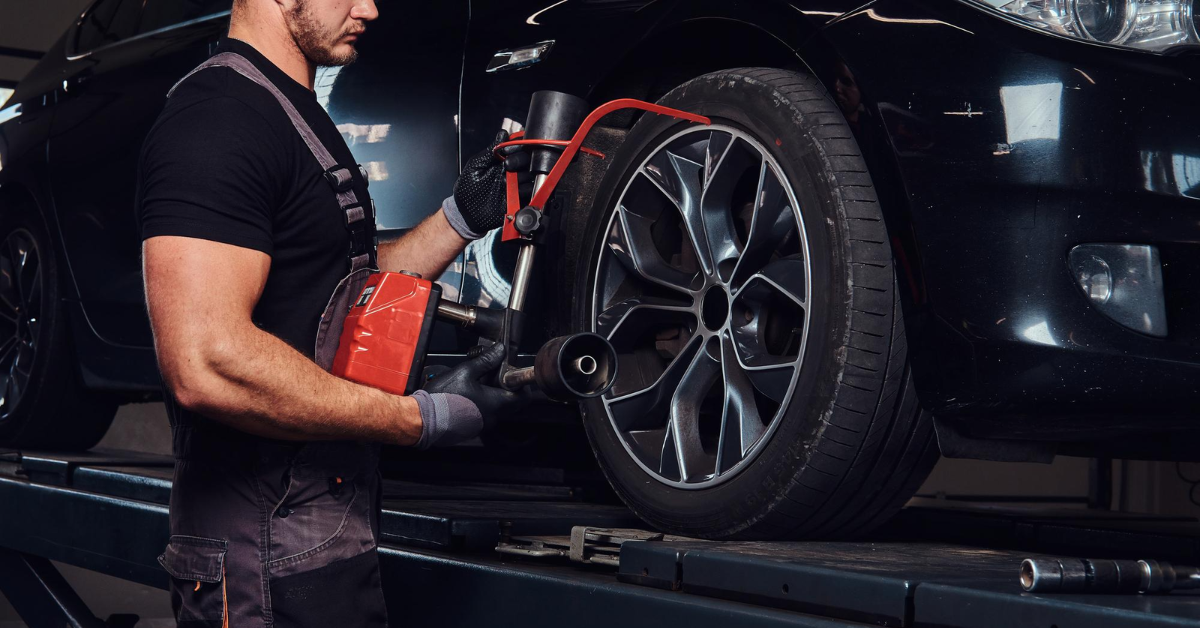
Car Vibrates at High Speed? Complete Guide to Tires, Suspension, and Alignment Issues

Most of the time, a car shakes at high speeds because of unbalanced tires, alignment problems, worn-out suspension parts, a bent wheel, or warped brake rotors. These problems get worse above 50–60 mph because everything is spinning faster. The faster you go, the more you feel it. A mechanic can find the exact cause pretty quickly, and most fixes are not that expensive.

In this guide, you will learn:

  • Why do cars shake at high speed?
  • How to figure out what is wrong based on when the shaking happens
  • Whether it is safe to keep driving or time to pull over
  • How much does it cost to fix, and how to stop it from happening again

Common Symptoms of High-Speed Vibrations

So how do you know it is actually a problem and not just a bumpy road? Watch out for these signs:

  • The steering wheel wobbles or shakes when you hit highway speeds
  • You feel a buzzing or vibrating through the seat or floor
  • The car drifts toward one side even when you are not turning
  • The tires look worn down unevenly, more on one edge than the other
  • You hear a strange humming or knocking coming from the wheels

If any of these sound familiar, keep reading; one of the seven causes below is probably your answer.

7 Most Common Reasons Your Car Vibrates at High Speed

1.   Unbalanced Tires

Think of a tire like a spinning top. If a spinning top is perfectly balanced, it spins smoothly. If one side is a tiny bit heavier, it wobbles. Tires work the same way.

Every tire has small metal weights attached to the rim to keep things balanced. Over time, those weights can fall off. When that happens, one part of the tire is heavier than the rest,  and at 55–70 mph, you feel that imbalance as a shake.

2.   Wheel Alignment Problems

Imagine trying to walk in a straight line with one leg pointed slightly sideways. You would constantly have to fight your own body just to go forward. That is basically what happens when your wheels are out of alignment.

When wheels are misaligned, they are pointing in slightly different directions instead of all pointing perfectly straight. This creates uneven pressure on the tires, wheel alignment problems causes the car to pull to one side, and produces vibration, especially on the highway.

Signs your alignment is off:

  • The car drifts left or right when you let go of the steering wheel
  • The steering wheel looks crooked even when driving straight
  • The tires are wearing down faster on one edge

This often happens after hitting a big pothole or a curb.

3.   Worn Suspension Components

Your car’s suspension is basically a system of springs, shock absorbers, and metal arms that sit between your tires and the rest of the car. Its whole job is to soak up bumps and keep the ride smooth.

Parts like shocks, struts, control arms, and ball joints slowly wear out over time. When they wear out, they stop absorbing bumps and vibrations as they should. Instead, all that shaking travels straight into the cabin. At higher speeds, worn suspension makes the car feel bouncy and unstable, almost like the tires are barely holding onto the road.

4.   Bent or Damaged Wheels

Car wheels look tough, but they can actually bend if you hit something hard enough, like a deep pothole or a curb at speed. Sometimes the bend is obvious. Sometimes you can barely see it.

Even a small bend completely ruins the smooth circular motion of the wheel. Instead of rolling in a perfect circle, it rolls in a slightly off-center wobble. And the faster you go, the more you feel that wobble as a vibration.

Telltale sign: The shaking gets noticeably worse as you speed up, and might come with a faint rhythmic thump.

5.   Uneven or Worn Tires

Tires do not always wear down evenly. Sometimes they develop cupping (wavy, scalloped patterns), bald spots, or the rubber starts separating from the inside. Any of these problems means the tire is no longer making smooth, consistent contact with the road, and that uneven contact creates vibration.

The most serious version of this is a tire with separated internal belts. The rubber can actually bubble or bulge on the outside. If you ever see that, do not keep driving; a blowout at highway speed is genuinely dangerous.

6.   Brake Rotor Issues

Brake rotors are the big metal discs that your brake pads squeeze against to slow the car down. They need to be perfectly flat to work properly. Sometimes rotors get warped, usually from overheating, like when someone rides the brakes going down a long hill. A warped rotor is no longer perfectly flat, so when the brake pads press against it, you feel a pulsing or vibrating, especially in the steering wheel.

How to spot it: The vibration happens while you are braking, not just while cruising. That is the key difference from most other causes.

7.   Axle or Driveshaft Problems

The driveshaft and CV joints are the parts that actually send power from the engine to the wheels. If the driveshaft gets bent — from a bad accident or hitting serious road debris- it wobbles as it spins, sending vibrations through the whole car.

CV joint problems often come with a clicking or popping sound when you turn. A damaged driveshaft usually causes a vibration that gets worse when you accelerate, not just at a steady speed.

Speed-Based Diagnosis

Here is a handy cheat sheet. Think about when your car shakes, and match it to the likely cause:

Speed Range Possible Cause
40–50 mph Tire imbalance (early stage)
55–70 mph Wheel balancing or alignment
70+ mph Suspension or drivetrain issues
During braking Warped brake rotors

This is not a perfect diagnosis; a mechanic still needs to confirm, but it gives you a really good starting point before you even walk into the shop.

Is It Safe to Drive a Car That Vibrates at High Speed?

Short answer: not really, no. Here is why it matters:

  • Tire blowout risk — Unbalanced or worn tires are way more likely to fail suddenly at high speed
  • Harder to steer — Bad alignment and worn suspension make emergency maneuvers much harder
  • Small problem → big bill — The longer you ignore it, the more damage it causes to tires, wheel bearings, and suspension parts
  • More expensive over time — A $40 tire balance ignored long enough can turn into a $600 suspension repair

If the shaking is mild, keep your speed under 55 mph and book an appointment soon. If the shaking is sudden and severe, pull over safely and call for help. Do not tough it out.

How Mechanics Diagnose High-Speed Vibrations?

A good mechanic does not just guess — they follow a step-by-step process:

  1. Tire balance test – Spin the wheels and check for uneven weight distribution
  2. Wheel alignment check – Measure the exact angle of each wheel and compare it to what the manufacturer recommends
  3. Suspension inspection – Physically push and pull on suspension parts to check for looseness or wear
  4. Road force tire testing – A more advanced test that checks how the tire behaves under real driving pressure (catches problems that basic balancing misses)
  5. Brake inspection – Measure whether the rotors are still flat or have warped

Most shops will also take the car on a test drive before and after the repair to make sure the fix actually worked. If they do not offer that, ask for it.

Average Repair Costs

Here is a realistic look at what these repairs typically cost:

Repair Average Cost
Tire balancing $15–$50 per wheel
Wheel alignment $80–$150
Suspension repair $200–$1,000+
Tire replacement (set of 4) $400–$900
Brake rotor replacement $250–$700

How to Prevent High-Speed Vibrations?

Most vibration problems are totally avoidable with basic maintenance. Here is what to do:

  • Rotate your tires every 5,000–7,000 miles so they wear down evenly instead of developing bald spots
  • Get a tire balance whenever you notice a new vibration, or any time you get new tires mounted
  • Dodge potholes and curbs when you can; even one good hit can throw off your alignment or bend a rim
  • Check your suspension once a year, especially if you drive on rough roads a lot
  • Keep tire pressure correct; both too much and too little air cause uneven wear

When to Visit a Mechanic?

Stop putting it off and book an appointment if:

  • The shaking is getting worse week by week
  • Your steering wheel wobbles at highway speeds
  • You only feel it while braking (warped rotors need attention soon)
  • You spot uneven or fast-wearing tires
  • The vibration started suddenly, especially after hitting something

None of these things fix themselves. The sooner you go, the cheaper and easier the repair will be.

Wrapping Up,

Here is the takeaway: a shaky car at high speed is your car trying to tell you something. It is not dangerous to hear the message — it is dangerous to ignore it.

Nine times out of ten, the cause is something completely normal — unbalanced tires, an alignment issue, or parts that just wore out over time. These are all totally fixable. A good mechanic can usually track down the problem in under an hour, and most common repairs will not empty your wallet.

Get it checked out, fix it early, and get back to actually enjoying the drive.

Frequently Asked Questions

  1. Why does my steering wheel shake at 70 mph?

That wobble at 70 mph is almost always caused by unbalanced tires or alignment issues. At that speed, even a tiny imbalance gets amplified into a pretty noticeable shake. A tire balance and alignment check will usually take care of it.

  1. Can bad tires cause vibration at high speed?

Yes, 100%. Tires that are worn out, worn unevenly, or have damage on the inside can shake pretty badly at highway speeds. If your tires are old or looking rough, they are the first thing to check.

  1. Why does my car vibrate but stop when I slow down?

Because the problem is speed-dependent. Things like tire imbalance and alignment only create noticeable forces above a certain speed — usually around 50–60 mph. Slow down, and those forces disappear. Speed back up, and they come back.

  1. Can wheel alignment fix vibration?

Often, yes. If the vibration is being caused by misaligned wheels creating uneven pressure on your tires, fixing the alignment will stop the shaking and prevent your tires from wearing out prematurely.

  1. Is it expensive to fix a vibrating car?

Not if you catch it early. Tire balancing and alignment together usually cost well under $150. More serious repairs like suspension work or rotor replacement cost more, but those are usually the result of waiting too long to fix the smaller stuff.