Modern Engine Diagnostics Explained: Sensors, Error Codes & Live Data Analysis

Your car is not just mechanical anymore. It is software-driven.

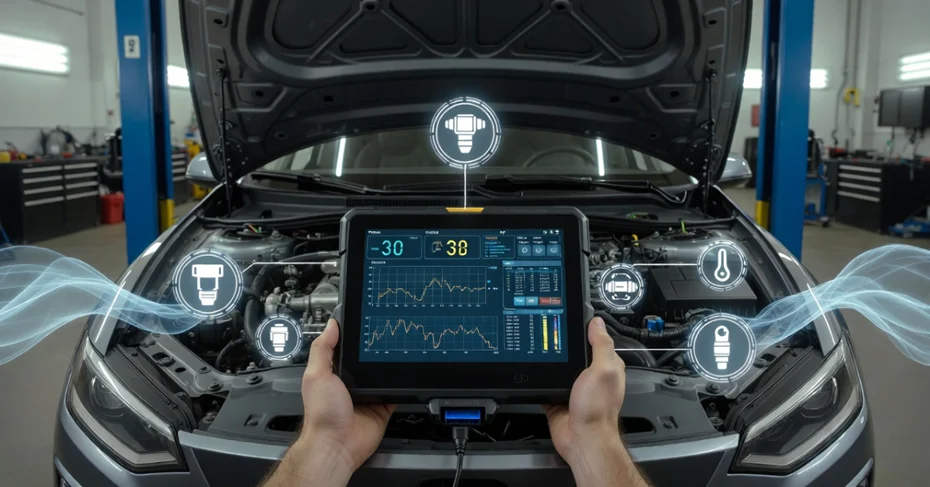
Every time you start the engine, dozens of sensors begin sending signals. The engine control module reads that data in milliseconds. That system is called modern engine diagnostics, and it is constantly checking performance.

It watches air intake, fuel delivery, ignition timing, exhaust output, and transmission behavior. If one value falls outside its normal range, the system flags it. That flag becomes a stored fault code. So diagnostics are not just about reading a light. They are about interpreting patterns inside the engine’s data stream.

How Do Engine Sensors Actually Influence Performance?

Sensors do more than report problems. They control how the engine runs. For example, the oxygen sensor adjusts the fuel mixture in real time. If it reads too lean, the computer adds fuel. If it reads too rich, it reduces fuel. The mass airflow sensor controls how much fuel gets injected.

A bad reading can cause hesitation or stalling. The coolant temperature sensor affects cold starts. If it fails, your engine may run rough or waste fuel. These parts work together. One faulty reading can throw off the whole system. That is why proper diagnostics matter.

What Do Engine Error Codes Mean in Real Terms?

Drivers often ask, what do engine error codes mean? An error code does not say “replace this part.” It tells us which system detected abnormal data.

For example:

  • P0301 means cylinder 1 misfire detected
  • P0171 means the system is too lean
  • P0420 points to catalytic efficiency below threshold

But here is the key: a code is a starting point, not a final answer. A misfire code might mean bad spark plugs. It could also mean a vacuum leak or injector issue. Without testing, replacing parts blindly wastes money.

Reading code is step one. Confirming the root cause is step two. That difference is what separates real diagnostics from guesswork.

Why Is Live Data More Important Than Stored Codes?

Stored codes show what happened. Live data shows what is happening now. When we review live data, we look at fuel trims, throttle position, oxygen sensor switching, transmission pressure, and load values. We compare those numbers to manufacturer specs.

For example, high long-term fuel trim often points to an air leak. If we only clear the code, the issue returns. Live data confirms whether the system corrected itself or still struggles.

This real-time analysis makes modern diagnostics accurate instead of reactive.

How Does the Diagnostic Process Work Step by Step?

Here is how a structured diagnostic approach works:

Step 1: Scan and Document Codes

We retrieve active and stored codes. We note freeze-frame data, which shows engine conditions when the fault occurred.

Step 2: Review Live Sensor Data

We monitor engine speed, fuel trims, voltage readings, and temperature values.

Step 3: Perform Targeted Tests

If we suspect ignition failure, we test coils and plugs. If fuel delivery looks weak, we test pressure and injectors.

Step 4: Confirm Before Replacing

We verify the failed component before installing new parts.

This process prevents unnecessary repairs and protects long-term engine health.

Can Diagnostics Detect Transmission Issues Too?

Yes. Modern vehicles link the engine and transmission systems closely. If shifting feels delayed or harsh, the transmission control module stores codes. Those codes show pressure errors, solenoid faults, or clutch slip conditions.

Drivers often search for transmission diagnostic services in Zeeland after noticing gear hesitation. In many cases, the issue starts with a sensor signal, not internal damage. Live transmission data shows gear ratios, slip speed, and hydraulic pressure.

That detail helps determine whether the issue is electronic or mechanical. For drivers needing transmission diagnostics in West Olive, a proper scan often prevents premature transmission replacement.

Why Do Some Problems Feel Intermittent?

Not all issues stay active. A sensor may fail only when hot. A coil may misfire under heavy load. A transmission may slip only during uphill driving. Stored codes and freeze-frame data show what was happening at the exact moment a problem occurred.

Without diagnostics, occasional issues are hard to track and can become costly. With clear data, it’s easier to spot patterns and fix the problem.

How Do Diagnostics Protect Fuel Economy and Emissions?

When sensors drift out of range, fuel efficiency drops. A faulty oxygen sensor may not cause obvious symptoms. Still, it can increase fuel use by 10 to 20 percent. Misfires increase emissions and strain the catalytic converter. Ignoring them can lead to expensive exhaust repairs.

That is why modern engine diagnostics protect both performance and operating cost. Early detection limits secondary damage.

When Should You Schedule a Diagnostic Check?

You should schedule diagnostics when:

  • The check engine light turns on
  • Fuel mileage drops suddenly
  • Acceleration feels weak
  • Shifting becomes rough
  • The engine idles unevenly

Waiting often makes repairs more complex. Even if the vehicle still drives, stored codes may show developing issues. Data gives clarity before a breakdown happens.

Why Is Clearing Codes Without Testing a Bad Idea?

Clearing codes resets the warning light. It does not solve the cause. If a lean condition exists, clearing the code only delays the light returning. Meanwhile, the engine continues compensating, which stresses components.

Proper diagnostics identify the root cause before a reset. That approach builds long-term reliability.

FAQs

What do engine error codes mean?

Engine error codes show which system detected unusual readings. They point technicians in the right direction, but they do not prove a specific part has failed. Further testing is always needed to confirm the real cause.

How accurate are modern diagnostic scans?

Modern diagnostic scans are very accurate when used correctly. However, reading codes alone is not enough. Accuracy improves when technicians review live data and perform hands-on testing to confirm what the numbers are showing.

Can diagnostics find transmission problems?

Yes, modern diagnostic tools scan both engine and transmission systems. They can detect shifting issues, pressure problems, and electronic faults, helping identify whether the concern is mechanical or related to sensors or control modules.

Is it safe to drive with the check engine light on?

If the light is steady, short trips may be safe, but the issue should still be checked soon. If the light is flashing, it often signals a serious misfire and requires immediate service to prevent damage.

How long does a full diagnostic test take?

A basic diagnostic scan usually takes 30 to 60 minutes. If the issue is complex or intermittent, additional testing and inspection may be needed, which can extend the total time required.

Need Clear Answers, Not Guesswork? Schedule Professional Diagnostics

Engine and transmission systems today rely on precise data signals. When those signals shift, performance follows.

At Cruz Automotive, we do more than read codes. We analyze live data, confirm root causes, and provide accurate solutions. Whether you need transmission diagnostic services in Zeeland or West Olive, or advanced engine analysis, our team focuses on precision.

If your warning light is on or your vehicle feels different, schedule a diagnostic visit with Cruz Automotive today. Accurate testing now prevents expensive repairs later.
Why Regular CVT Service Matters – Avoid Costly Repairs with Fluid Maintenance

At Cruz Automotive, located in the heart of Holland, we understand the intricate mechanics of continuously variable transmissions (CVTs). As more vehicles roll in equipped with this advanced transmission, one thing becomes crystal clear: regular CVT service, particularly CVT fluid change or CVT fluid replacement, is not a mere afterthought, it’s an essential part of keeping your vehicle running smoothly and your wallet happy.

The Uniqueness of CVT Transmissions

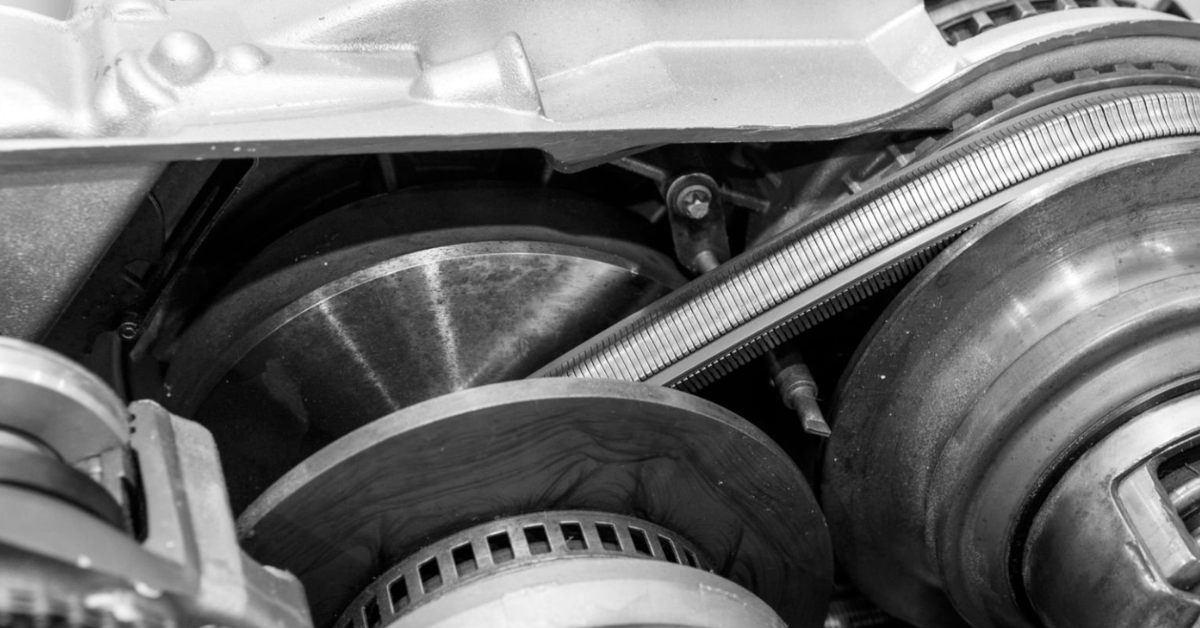
CVT transmissions differ significantly from traditional automatic or manual gearboxes. Instead of fixed gears, CVTs use a belt or chain that smoothly adjusts through a range of ratios. This design delivers a seamless driving experience, improved fuel efficiency, and a smoother ride. But this sophistication comes with its own set of maintenance needs.

In particular, CVTs rely heavily on specialized transmission fluid. This fluid is more than lubrication, it manages heat, provides hydraulic pressure, reduces friction, and ensures the entire mechanism operates optimally. Over time, contaminants and heat break it down, leading to degraded performance.

The Risks of Skipping CVT Fluid Maintenance

You might wonder, “What happens if we skip regular CVT fluid service?” The answer is, unfortunately, costly and inconvenient:

  • Increased wear and tear: Old or degraded fluid loses its ability to manage pressure and temperature, reducing lubrication and causing premature component wear.
  • Overheating: CVTs generate considerable heat, especially in stop-and-go traffic or under load. Stale fluid can’t dissipate heat effectively, risking overheating and internal damage.
  • Slipping or jerking: Degraded fluid can lead to inconsistent hydraulic pressure, resulting in slipping belts, jerky acceleration, or hesitations during gear transitions.
  • Total transmission failure: If small issues are ignored, they can escalate rapidly. What could have been resolved with a CVT fluid change may grow into a full transmission rebuild, or replacement.

Our Commitment: CVT Transmission Service in Holland

At Cruz Automotive, our team is committed to delivering reliable, honest, and high-quality service. Here’s how we approach CVT transmission service in Holland:

  1. Fluid inspection

We begin with a thorough inspection of your CVT fluid. We’ll check the level, clarity, color, and smell. Healthy CVT fluid is typically translucent with a reddish to golden hue. If it appears dark, burnt, or has a foul odor, that’s a clear sign it’s time for a change.

  1. Expert fluid replacement

Using manufacturer-approved fluid, we perform a full CVT fluid replacement, ensuring contaminants are removed, and fresh fluid circulates through the transmission. This step bolsters lubrication, restores hydraulic performance, and helps your transmission shed excess heat.

  1. System check

After fluid replacement, our technicians monitor system temperature and pressure, verifying the transmission operates within optimal parameters. We’ll catch any irregularities early, before they become big headaches.

  1. Transparent recommendations

We’ll walk you through what we discover. If other maintenance or servicing is recommended, like filter replacements or gasket inspection, you’ll know exactly what’s going on and why.

When to Schedule CVT Fluid Maintenance

While maintenance intervals vary between makes and models, here’s a general guideline many drivers in Holland rely on:

  • Every 30,000 to 60,000 miles (approximately 48,000 to 96,000 kilometers)
  • Regular CVT fluid change within this range helps preserve performance and longevity.
  • Earlier if towing, city-driving, or high-heat conditions prevail
  • Heavy use or heat-intensive driving can accelerate fluid degradation.
  • At the first sign of trouble
  • Slipping, jerking, overheating, or longer-than-usual shifts are all red flags.

The Cost-Saving Case for Fluid Maintenance

Let’s put it in perspective:

  • Cost of CVT fluid change: Relatively low, especially compared to the expense of major repairs.
  • Cost of CVT rebuild or replacement: It can easily climb into the thousands of dollars. Avoiding this through routine maintenance isn’t just smart, it’s economical.

By staying ahead of wear and clearly understanding your transmission’s needs, CVT transmission repair in Holland can become the exception, not the rule.

We’re Here to Help!

Regular maintenance like CVT fluid replacement is about more than avoiding mechanical problems, it’s about preserving the performance, reliability, and safety of your vehicle. At Cruz Automotive, your confidence in our service is just as important as the health of your transmission.

Ready to prioritize your transmission’s future? Make the smart move with CVT transmission service in Holland. Contact us today or schedule your appointment online at Cruz Automotive.


Wheel Alignment Issues in Holland? Here’s Why Your Car Is Pulling Left

Have you ever noticed your car drifting to the left when you’re trying to drive straight? If you’re constantly correcting your steering just to stay in your lane, it could be more than a minor inconvenience, it may be a sign of serious alignment trouble. At Cruz Automotive, we specialize in auto alignment service in Holland, and we’re here to help you understand what’s causing your car to pull left and how to fix it.

Common Signs of Wheel Misalignment

If your car starts pulling in one direction, particularly the left, it’s time to take action. Misaligned wheels not only affect your driving experience but also jeopardize your safety. Some telltale signs include:

  • Uneven or rapid tire wear
  • A crooked steering wheel when driving straight
  • Vehicle pulling to one side
  • Squealing tires
  • Difficulty steering or vibration in the steering wheel

When any of these symptoms appear, it’s wise to seek alignment service near you before the issue worsens.

What Causes a Car to Pull Left?

There are several possible reasons your vehicle might pull left during normal driving conditions. Below are the most common culprits:

1. Wheel Alignment Problems

The most frequent cause is improper wheel alignment. Even hitting a small pothole or curb can knock your wheels out of alignment. In places like Holland, MI, where seasonal changes affect road conditions, this is particularly common. If your alignment angles, camber, caster, and toe, are off, your vehicle may begin to drift or pull to one side. For professional wheel alignment in Holland MI, Cruz Automotive has the right tools and expertise to restore balance.

2. Tire Issues

Sometimes, it’s not alignment at all, it could be your tires. Uneven tire pressure, tread wear differences, or even defective tires can cause your car to veer to the left. Rotating your tires and ensuring they’re inflated properly can resolve minor steering issues, but in many cases, misalignment is the root of the problem.

3. Brake Problems

A sticking brake caliper or uneven brake pad wear can lead to a pull when braking or even during normal driving. This is especially dangerous because it compromises your ability to stop safely. Our technicians at Cruz Automotive can diagnose and repair braking issues in conjunction with alignment concerns.

4. Suspension or Steering Component Wear

Over time, components such as ball joints, tie rods, or control arms may wear out. These parts help maintain proper alignment and steering responsiveness. If any of them are loose or damaged, it could result in steering problems in Holland, including a pull to one side.

Why Alignment Matters

Ignoring alignment issues leads to more than a crooked steering wheel. Poor alignment increases tire wear, reduces fuel efficiency, and places stress on steering and suspension components. That means you’ll not only be spending more on tires and fuel but may face larger repair bills down the line.

Getting regular auto alignment service in Holland keeps your vehicle operating safely and efficiently. Whether your car is gently pulling or veering aggressively, our certified mechanics at Cruz Automotive will perform a comprehensive alignment check and adjust your wheels according to manufacturer specifications.

Don’t Let Steering Problems Disrupt Your Drive

Your safety and comfort on the road start with proper alignment. If your car is pulling left or showing other signs of misalignment, don’t wait. Trust Cruz Automotive for reliable wheel alignment in Holland MI. Visit us to schedule your appointment today and let our team put you back in control of your drive.

FAQs

Q: How often should I get a wheel alignment?

A: We recommend checking your alignment every 6,000 miles or at least once a year. If you hit a pothole or curb, it’s smart to get it checked sooner.

Q: What does a wheel alignment service include?

A: Our alignment service includes inspection of suspension components, tire condition, and precise adjustments using computerized tools.

Q: Can I drive with poor alignment?

A: Technically yes, but it’s unsafe. Misalignment affects handling and braking and leads to faster tire and component wear.

Need help now? Book your alignment check today. Your smooth ride is just an appointment away.