What does it mean when your car makes unusual noises?
Unusual car noises usually indicate wear, loose components, fluid problems, or mechanical failure. Squealing often means belt issues, grinding points to brake damage, knocking suggests engine combustion or lubrication trouble, rattling may indicate exhaust or suspension problems, and hissing can signal coolant or vacuum leaks. Ignoring these sounds can lead to expensive repairs or safety risks.
Modern vehicles are engineered to run smoothly. When a new sound appears, it is usually your car’s early warning system.
Quick Summary:
In this article, we will learn:
- What common car noises usually mean
- When it is unsafe to keep driving
- How mechanics diagnose unusual car noises
- What you can check yourself before visiting a shop
- Typical repair costs and risk levels
What do different car noises usually mean?
Different sounds point to different systems. Here is a clear breakdown of the most common noises and what they typically indicate.
Squealing noise when starting or accelerating
Squealing usually means the serpentine belt is worn, loose, or slipping.
- Likely cause: Serpentine belt or pulley
- Risk level: Low to moderate
- Urgency: Inspect within 1 to 2 weeks
The serpentine belt powers components like the alternator and air conditioning. If it fails, your car may stall. While this issue is not immediately dangerous, waiting too long increases the chance of a breakdown.
Grinding noise when braking
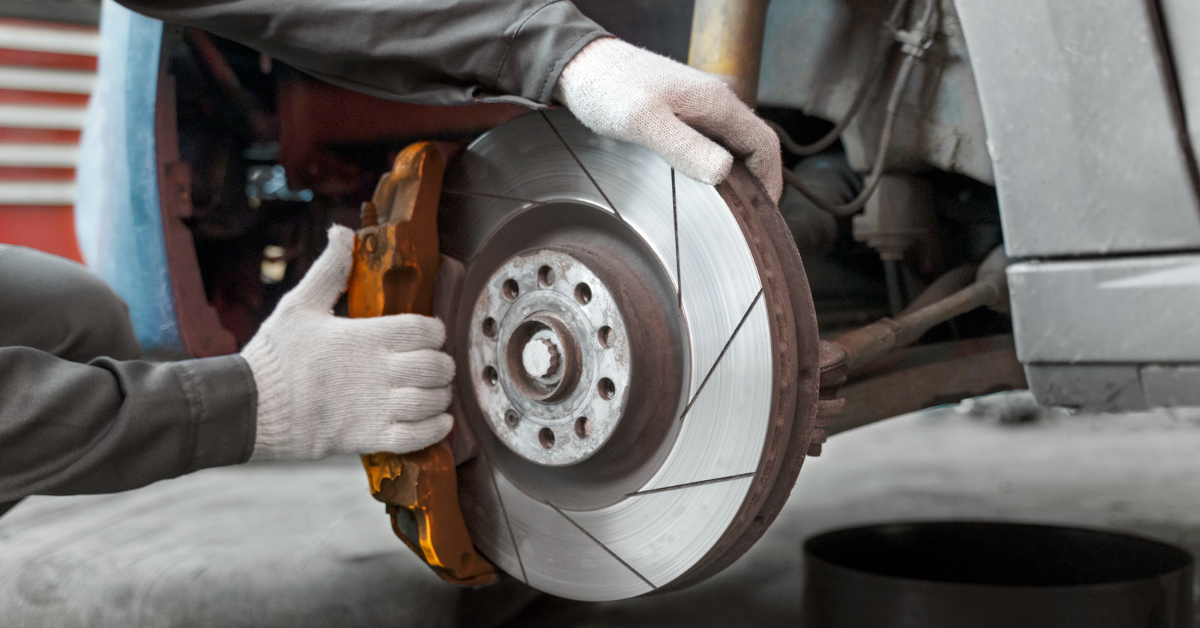
Grinding while braking almost always means the brake pads are worn down completely.
- Likely cause: Worn brake pads
- Risk level: High
- Urgency: Immediate repair
When brake pads wear out, metal rubs against the rotor. This damages both parts and increases the stopping distance. According to the National Highway Traffic Safety Administration, brake-related issues contribute to thousands of crashes each year. Driving with grinding brakes is unsafe and can multiply repair costs quickly.
Knocking or pinging from the engine
Knocking from the engine usually indicates improper fuel combustion or low oil levels.
- Likely cause: Combustion issue or internal engine wear
- Risk level: High
- Urgency: Diagnostic test required
Low oil reduces lubrication, which causes metal components to strike each other. According to AAA, engine-related problems are one of the top causes of roadside breakdowns in the U.S. Experts recommend checking oil levels immediately if knocking begins suddenly.
Rattling under the car
Rattling underneath the vehicle often means a loose heat shield or exhaust component.
- Likely cause: Loose exhaust or heat shield
- Risk level: Moderate
While this may not affect driving immediately, parts can detach over time. Industry best practice suggests addressing exhaust rattles early to prevent further damage.
Comparison Table: Common Car Noises and Risk Levels
| Noise Type | Most Likely Cause | Risk Level | Repair Urgency |
| Squealing | Serpentine belt | Low to Moderate | Within 1–2 weeks |
| Grinding | Brake pads | High | Immediate |
| Knocking | Engine issue | High | Diagnostic ASAP |
| Rattling | Exhaust/suspension | Moderate | Schedule inspection |
When Is It Unsafe to Drive With a Noise?
Some noises are “get it looked at soon” problems. Others mean you should pull over right now. Here’s how to tell the difference:
- The noise gets noticeably louder or more frequent within a short drive, which means something is actively failing.
- Your check engine light or brake warning light appears alongside the noise. Indicating your car is flagging a specific problem.
- Steering feels loose, heavy, or vibrates in new ways. This can affect vehicle control at speed.
- Braking feels spongy, pulls to one side, or takes longer. As compromised brakes are a safety emergency.
- You smell something burning. Burning rubber (belt), burning metal (brakes), or a chemical smell (electrical) all mean stop immediately.
According to the Car Care Council, 77% of vehicles need maintenance or repairs at any given time. Many of those issues begin as ignored sounds. While minor squeaks can wait briefly, braking or engine-related noises require immediate attention.
When in doubt: pull over safely, turn off the engine, and call your mechanic. A tow is always cheaper than an engine rebuild or your safety.
Can I Diagnose Car Noises Myself?
Yes, you can do a few simple checks at home before calling a shop. These won’t replace a full inspection, but they can give you helpful clues and sometimes point to an obvious issue right away.
Here are a few things you can safely look at:
● Check the Serpentine Belt
Make sure the engine is off and cool. Then look at the belt for cracks, fraying, a shiny surface, or missing pieces. If you notice any of these, the belt likely needs to be replaced.
● Look at Your Brake Pads
You can often see the brake pads through the wheel spokes. If the pad material looks very thin, about a quarter inch or less, or if the rotor surface looks scratched or grooved, it’s probably time for new brakes.
● Check the Oil Level
If you hear ticking or knocking, start with the oil. Pull out the dipstick, wipe it clean, put it back in, and pull it out again to check the level. If the oil is low or looks very dark and dirty, that alone can cause noise and should be addressed first.
● Inspect the Tires
A steady thumping sound at highway speed could mean a flat spot, a bubble in the sidewall, or a missing wheel weight. Look for uneven tread wear, visible damage, or objects stuck in the tire.
Why Professional Diagnostics Are More Accurate?
Basic checks are helpful, but they have limits. Mechanics use tools and experience that most drivers don’t have.
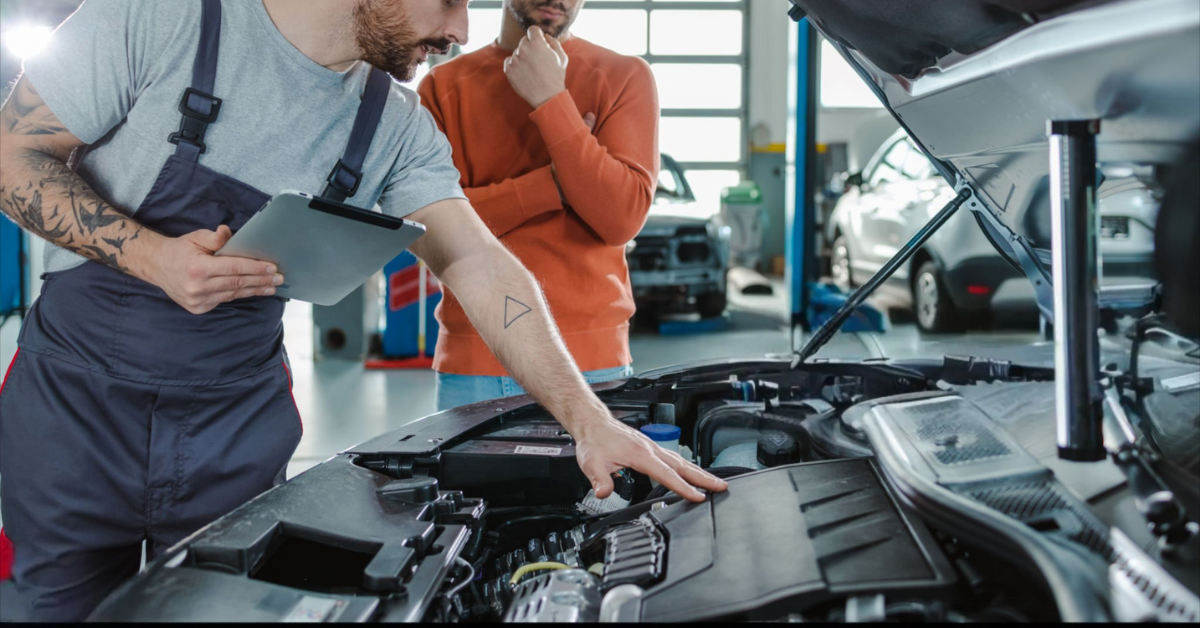
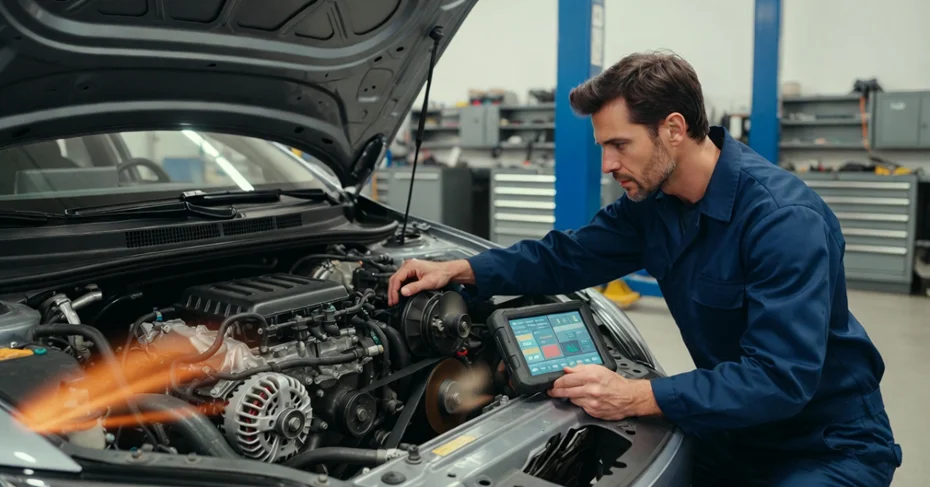
For example, an OBD-II scanner can read trouble codes stored in your car’s computer, even if the check engine light is not on. A lift inspection allows a technician to see worn bushings, loose components, cracked mounts, or exhaust problems that you simply can’t see from the ground. And during a road test, an experienced technician can pick up on sounds that only happen while driving, not when the car is sitting still.
In many cases, getting a professional diagnosis early can save money because it prevents guessing and replacing parts that aren’t actually the problem.
How Mechanics Diagnose Car Noises?
Mechanics diagnose car noises by road testing the vehicle, scanning the onboard computer for codes, performing a full digital inspection, and examining the car on a lift to check hidden components. This structured process helps them find the exact source instead of guessing and replacing parts unnecessarily.
If you are hearing a new or unusual sound, getting a proper diagnosis early often prevents a small issue from turning into a major repair. Here is how mechanics diagnose car noises in a typical visit.
1. Road Test
First, the technician drives your car. They try to repeat the noise under the same conditions you described, such as:
- At idle
- During acceleration
- While braking
- When turning
- At highway speeds
This helps them hear and feel the issue directly. For example, a noise during braking points to the brake system, while a sound during turns may involve suspension or CV joints. Reproducing the noise is often the key to narrowing down the right system.
2. OBD-II Scan
Next, they connect a scanner to your car’s onboard diagnostic port under the dashboard. This is called an OBD-II scan. The scanner can:
- Read stored trouble codes
- Detect pending codes
- Show live sensor data
Even if you do not see a warning light, your car’s computer may already be tracking a problem. The scan gives early clues that cannot be heard just by listening to the engine.
3. Digital Vehicle Inspection (DVI)
Many repair shops now perform a full digital vehicle inspection. This is a multi-point check of major systems, including:
- Belts and hoses
- Brakes
- Tires
- Fluid levels and condition
- Lights
- Steering and suspension parts
This step ensures the mechanic is not just fixing one noise while missing another developing issue. It gives you a full picture of your vehicle’s overall condition.
4. Lift Inspection
Finally, the car is raised on a lift. This allows the technician to see parts that are impossible to inspect from the ground. On a lift, they can check for:
- Worn CV boots
- Loose or cracked exhaust hangers
- Rusted or damaged brake hardware
- Loose heat shields
- Worn suspension bushings
- Fluid leaks
Many rattles, clunks, and vibration issues are confirmed during this stage because the undercarriage is fully visible.
Hearing Something Strange in Holland, MI?
If you’re driving around Holland, on US-31, James Street, or the lakeshore roads, and your car is making a sound you’ve never heard before, don’t wait to see if it goes away on its own. Most mechanical noises don’t self-correct; they get worse.
Professional diagnostics at a trusted local shop can identify the root cause before it cascades into a much larger repair. Our team uses current OBD-II diagnostic tools, performs thorough lift inspections, and gives you a clear, honest assessment of what’s going on and what it’ll take to fix it.
FAQs
What Is the Most Serious Car Noise?
The most serious car noises are deep metallic engine knocking and metal grinding from the brakes because both can signal severe mechanical failure. Engine knocking may indicate worn internal bearings, while brake grinding usually means the brake pads are completely worn down. If you hear either sound, stop driving and have the vehicle inspected immediately.
Can Low Oil Cause Knocking Sounds?
Yes, low oil can cause engine knocking because internal engine parts are not properly lubricated. When oil levels drop, metal components begin rubbing together, which creates a knocking or tapping noise. If you hear knocking, check the dipstick right away. Add the correct oil if low. If the noise continues, stop driving and schedule an inspection.
Why Does My Car Make a Noise When Turning?
A clicking or popping noise while turning is most commonly caused by a worn CV joint. This happens when the protective rubber boot cracks, grease leaks out, and the joint wears down. Because these parts affect steering control, it is important to have the vehicle checked soon.
How Much Does It Cost to Fix Car Noises?
Car noise repair costs typically range from $75 to over $2,500, depending on the cause and how long the problem has been ignored. Minor issues are inexpensive, but internal engine damage can be costly.
Common repair cost ranges:
- Serpentine belt replacement: $75 to $200
- Brake pads per axle: $150 to $300
- Brake pads and rotors per axle: $300 to $600
- CV joint repair: $200 to $400
- Exhaust heat shield repair: $75 to $150
- Engine diagnostic: $100 to $150
- Engine bearing repair: $500 to $2,500 or more
Fixing the issue early usually keeps costs lower and prevents larger repairs.
Is It Safe to Drive With a Knocking or Grinding Noise?
No, it is not safe to drive with a knocking engine or grinding brakes because both indicate serious mechanical problems. Continuing to drive can cause severe engine damage or reduced braking ability. If the sound is loud, consistent, or getting worse, limit driving and schedule service as soon as possible.