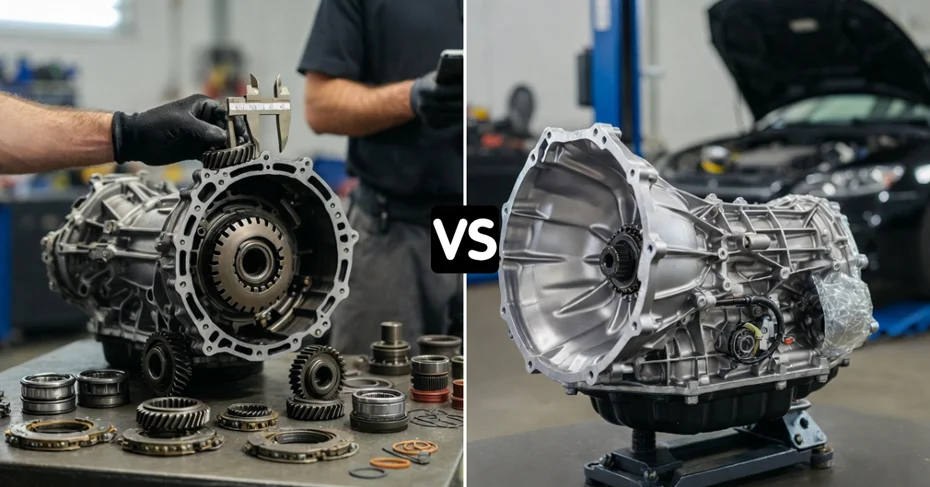
Rebuild vs Replace: How Mechanics Decide the Best Transmission Solution

When your car starts slipping, jerking, or refusing to shift, your stomach drops a little. Then comes the big question: should you rebuild or replace the transmission?

We hear this all the time during transmission diagnostics in Zeeland. And honestly, there is no one-size-fits-all answer. The right choice depends on what failed, how badly it failed, and what you want from your vehicle long term. Let’s walk through.

What Does Your Transmission Actually Do?

Your transmission controls how power moves from the engine to your wheels. It allows your car to change gears smoothly as you speed up or slow down.

When it works, you barely think about it. When it fails, you definitely notice. You might feel:

  • Delayed shifting
  • Slipping between gears
  • Hard jerks when accelerating
  • A burning smell
  • Fluid is leaking under your car

These signs mean it’s time for proper transmission diagnostics in Zeeland, not guesswork.

What Happens During Transmission Diagnostics?

Before we ever talk about repairs, we test. Here’s how that usually works:

Step 1: Computer Scan

We check for error codes stored in your vehicle system.

Step 2: Fluid Inspection

Transmission fluid should be clean and red. If it smells burnt or looks dark, that tells us something.

Step 3: Road Test

We drive the vehicle to feel how it shifts under load.

Step 4: Internal Inspection if Needed

If symptoms are serious, we may open the unit to check internal damage.

Good diagnostics prevent unnecessary repairs. That’s why accurate transmission diagnostics in Zeeland matter so much.

What Does It Mean to Rebuild a Transmission?

A rebuild means we remove the transmission and take it apart. Then we replace worn parts like seals, clutches, and bands. Strong components stay. Damaged ones go. Think of it like fixing what’s broken instead of replacing the whole machine.

Rebuilding is one of the most common transmission repair options when the damage is contained, and the housing is still solid. It usually costs less upfront. But the final price depends on how much internal damage we find.

What Does It Mean to Replace a Transmission?

Replacement is more straightforward. We remove the entire transmission and install a new or remanufactured unit. This option is often better when:

  • Internal damage is widespread
  • Metal fragments have spread through the system
  • The transmission has failed more than once

Drivers needing automatic transmission repair in Zeeland sometimes choose replacement for long-term reliability, especially if they plan to keep the car several more years.

How Do Mechanics Decide to Rebuild or Replace a Transmission?

We follow logic, not pressure. Here’s what we look at:

How Bad Is the Damage?

If only certain parts are worn, rebuilding may make sense. If damage is everywhere, replacement may be safer.

What Is the Vehicle Worth?

If the repair cost is close to the car’s value, that changes the discussion.

How Do You Use the Vehicle?

Daily commuting is different from towing trailers every weekend.

How Long Do You Plan to Keep It?

If you’re keeping the car long term, replacement may offer peace of mind.

When deciding whether to rebuild or replace the transmission, we match the repair plan to your situation, not just the mechanical issue.

Is Rebuilding Always Cheaper?

Usually, yes. But cheaper today is not always cheaper later. Rebuilding often costs less upfront. Replacement costs more at first, but it may reduce repeat failures.

The smart move depends on the condition of your current unit. That’s why strong transmission repair options start with strong diagnostics.

Can You Keep Driving With Transmission Problems?

Short answer: you shouldn’t.

A slipping transmission causes friction and heat. Heat leads to more damage. More damage leads to fewer repair choices.

Catching the problem early during transmission diagnostics in Zeeland can mean rebuilding instead of replacing. Waiting often removes that option.

How Long Does a Rebuild or Replacement Last?

A properly rebuilt transmission can last many years with good maintenance. A new or remanufactured replacement often lasts longer, especially under heavy use.

After any automatic transmission repair in Zeeland, regular fluid changes and inspections help protect your investment. Maintenance always matters.

What Is the Right Choice for You?

There is no universal rule. Rebuilding may be best if:

  • The damage is limited
  • You want a lower upfront cost
  • The vehicle is older but still reliable

Replacement may be better if:

  • The damage is extensive
  • You plan to keep the vehicle long-term
  • The transmission had already failed before

The key is making the decision based on facts, not fear.

FAQs

How do I know if I need to rebuild or replace the transmission?

The only way to know for sure is through a full inspection and diagnostic test. If the damage is limited to certain parts, rebuilding may work well. If internal damage is widespread, full replacement is usually the safer option.

Is rebuilding a transmission reliable?

Yes, rebuilding can be very reliable when the damage is contained and the work is done properly. The quality of replacement parts and the skill of the technician both play a major role in long-term performance.

How much does automatic transmission repair cost?

Repair costs depend on your vehicle type and how severe the damage is. A rebuild often costs less than full replacement, but a proper diagnostic check is needed to determine the exact repair and final estimate.

What are the warning signs of transmission failure?

Common warning signs include slipping gears, delayed or rough shifting, burning smells, leaking transmission fluid, and grinding noises. If you notice any of these symptoms, it is best to schedule an inspection before the problem worsens.

How long does transmission repair take?

Most transmission repairs take several days, depending on parts availability and repair complexity. In some cases, replacing the transmission may take less time than performing a complete rebuild from start to finish.

Need Honest Advice About Transmission Repair Options in Zeeland?

Transmission problems feel overwhelming. But the decision does not have to be.

If your vehicle is acting up, start with professional transmission diagnostics. Once we see what’s happening inside, we can clearly explain whether you should rebuild or replace the transmission based on your goals and budget.

At Cruz Automotive, we provide straightforward automatic transmission repair in Zeeland and walk you through all available repair options without pressure. Schedule your inspection today and get real answers you can trust.

Check Engine Light On? What the Most Common Warning Codes Really Mean

If your check engine light turns on, do not panic, but do not ignore it either. If the light is steady, first check that your gas cap is tight, then schedule a diagnostic scan as soon as possible. If the light is flashing, stop driving immediately because this often signals a serious engine misfire that can damage your catalytic converter. The check engine light means your vehicle’s onboard diagnostic system has detected a problem and stored a trouble code that needs to be read with a scan tool.

What Does the Check Engine Light Actually Mean?

Think of your car as having its own nervous system. Every car sold in the U.S. after 1996 has a built-in system called OBD-II. It watches over your engine, emissions, transmission, and fuel system around the clock. Hundreds of tiny sensors feed it information nonstop.

When something goes wrong, the system flags it with a trouble code, usually something like P0420 or P0300. Then it switches on that little amber light on your dashboard. The light doesn’t tell you what broke. It just tells you something broke. That’s where a proper scan comes in.

Steady vs. Flashing Check Engine Light

Here’s the big thing most people miss: how the light behaves matters just as much as the light being on.

Steady Light = Don’t Freak Out, But Don’t Ignore It

A solid light usually means a minor to moderate issue. Your car caught something off and logged it. You can drive for a short while, but get it checked quickly. Small problems have a way of growing into big, expensive ones when you put them off.

Flashing Light = Pull Over Now

A flashing light is your car screaming at you. It means the engine is misfiring badly — unburned fuel is shooting into the exhaust system. This can fry your catalytic converter in just a few minutes of driving.

Stop the car. Turn off the engine. Call a tow. Seriously, don’t push your luck on this one.

Most Common Reasons the Check Engine Light Turns On

Most check engine light visits come down to the same handful of culprits. Here they are, straight up.

1. Loose or Missing Gas Cap

Yep, it can be that simple. A loose gas cap lets fuel vapors escape. The emissions system picks that up and goes, “Hey, something’s leaking.” Tighten the cap, and the light usually clears itself after a few drives.

2. Faulty Oxygen Sensor

Your car has oxygen sensors in the exhaust that track how well your engine is burning fuel. When one goes bad, the engine gets the wrong information and starts wasting gas. Leave it too long, and it’ll damage your catalytic converter too. Common codes: P0138, P0141.

3. Bad Spark Plugs or Ignition Coils

Spark plugs light the fuel inside your engine. When they wear out, the engine starts misfiring, basically, some cylinders stop doing their job. You’ll feel it as a shaky idle or sluggish acceleration. This is also what causes that scary flashing light. Common codes: P0300–P0308.

4. Catalytic Converter Issues

The catalytic converter cleans up your exhaust before it leaves the tailpipe. When it fails, usually because of ignored spark plugs or a bad oxygen sensor, your car loses power and starts smelling like rotten eggs. It’s one of the pricier fixes, which is exactly why you want to catch the smaller problems before they get here. Common code: P0420.

5. Transmission Sensor Problems

Your transmission has sensors watching speed, temperature, and gear shifts. When one acts up, the check engine light kicks on, and your car might start shifting weirdly or hesitating. Catch it early, transmission repairs get real expensive, real fast.

Common OBD-II Warning Codes — Quick Reference

Code What It Means Severity Can You Drive?
P0420 Catalytic Converter Efficiency Low 🔴 High Short distances only
P0300 Random/Multiple Engine Misfires 🔴 High No, stop driving
P0301–P0308 Misfire in Specific Cylinder 🔴 High No, stop driving
P0171 Engine Running Too Lean (Bank 1) 🟡 Moderate Yes, but get it checked soon
P0174 Engine Running Too Lean (Bank 2) 🟡 Moderate Yes, but get it checked soon
P0138 Oxygen Sensor High Voltage (Bank 1) 🟡 Moderate Yes, but don’t delay
P0141 Oxygen Sensor Heater Fault 🟡 Moderate Yes, but don’t delay
P0440 Evaporative Emission System Fault 🟢 Low Yes, schedule a scan
P0455 Large Evap Leak (often a gas cap) 🟢 Low Yes, check the gas cap first
P0500 Vehicle Speed Sensor Malfunction 🟡 Moderate Cautiously,  affects shifting
P0700 Transmission Control System Fault 🔴 High No, get it diagnosed fast
P0128 Engine Coolant Temp Below Normal 🟡 Moderate Yes, but the  thermostat may be failing

Can You Reset the Check Engine Light?

Short answer: yes. But it’s not as clever as it sounds.

You can plug an OBD-II scanner into the port under your dashboard, pull the trouble code, and clear it. The light goes off. Problem solved, right?

Wrong.

If you didn’t actually fix what caused the light, it’ll come right back. Usually, within a few days of driving. You haven’t fixed anything — you’ve just turned off the alarm while the problem keeps getting worse.

There’s really only one good reason to reset the light: to confirm a repair actually worked. If the light stays off after the reset, you’re good. If it comes back, the fix didn’t take.

How a Professional Diagnostic Test Works?

A free code read at an auto parts store is a start, but it’s not a diagnosis. Here’s what a real diagnostic test actually looks like.

Code Scanning

A technician hooks up a pro-grade scanner and pulls every stored code from your OBD-II system. This points to which system or part triggered the light.

Live Data Monitoring

The technician watches your engine’s sensors in real time while the car runs. This shows how things are actually performing right now, not just when they failed.

Component Testing

Based on the codes and live data, the technician tests the actual parts, checking sensor signals, wiring, fuel delivery, and more, to nail down the exact problem.

Repair Estimate

Once the root cause is confirmed, you get a straight answer on what’s broken and what it costs to fix it. No guesswork, no fluff.

The difference between a free scan and a full diagnostic is like the difference between a doctor saying “you have a fever” versus figuring out why you have a fever. One gives you a clue. The other gives you a solution.

Check Engine Light On in Holland, MI? Here’s Your Next Move

If you’re in the Holland, MI area and that light just came on, don’t sit on it.

A professional diagnostic scan will tell you exactly what’s going on,  fast. Whether it’s something small like a gas cap or something bigger under the hood, the only way to know for sure is to get it scanned by someone who knows what they’re doing.

Cruz Automotive offers thorough diagnostic scans with real technicians and professional tools. Get it checked before a small issue turns into a big bill.

FAQs

Can I drive with the check engine light on?

If it’s steady, you can drive carefully for a short time, but get it scanned ASAP. If it’s flashing, stop driving right now. A flashing light means your engine is misfiring badly and can wreck your catalytic converter in minutes.

How long can I ignore a check engine light?

Honestly? Not long. Even if your car feels fine, something is off under the hood. Give it a day or two at most before getting it checked. A flashing light? That’s a same-day emergency, no question.

Will the check engine light turn off by itself?

Sometimes. If the problem fixes itself,  like a gas cap that was just a little loose, the light may go off after a few normal drives. But if the issue is still there, the light will come right back.

Is a check engine light always expensive to fix?

Not at all. A new gas cap is under $20. An oxygen sensor replacement usually runs $150–$300. But if it turns out to be a catalytic converter, you could be looking at $1,000 or more. The only way to find out what you’re dealing with is a proper diagnostic scan.

CVT vs. Traditional Automatic Transmissions – What’s the Difference and Does It Matter?

Introduction

Have you ever wondered why some cars shift smoothly and others feel like they jump between gears? Many drivers hear the terms CVT and automatic but aren’t sure what they actually mean. This guide explains the basics in simple, easy-to-read language. You will learn the major CVT vs traditional automatic differences, why they matter, and how proper care can help your car last longer. If you want better performance and fewer repairs, understanding your transmission is a smart move.

What Is a Traditional Automatic Transmission?

A traditional automatic transmission uses a set number of gears, such as 6-speed or 8-speed. As you speed up, it shifts from one gear to another. You can usually feel these shifts, especially when accelerating fast or driving uphill.

Many drivers enjoy that feeling because it gives a sense of control and strength. Automatic transmissions have been used for many years and are known for handling heavy loads and high horsepower. They are common in trucks, SUVs, and performance-focused cars.

Main Differences Between CVT and Automatic

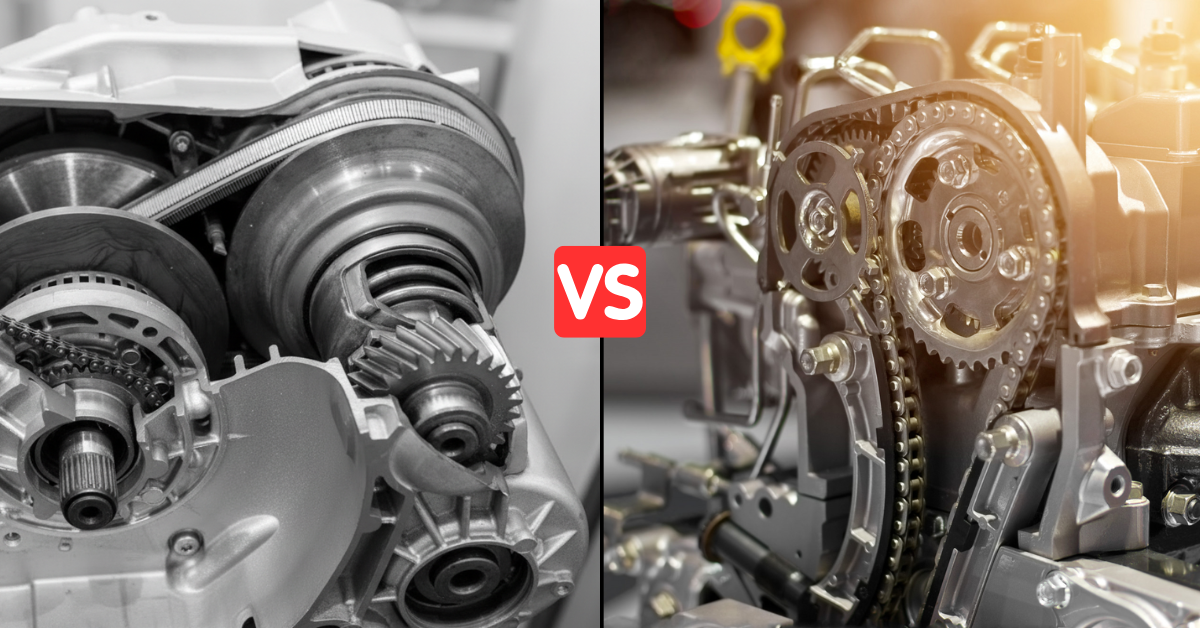
A CVT delivers power smoothly without shifting between gears, which makes the drive calm and steady. A traditional automatic uses set gears, so you feel each shift, giving a stronger and more responsive driving feel.

CVTs are usually more fuel-efficient because they keep the engine in its best power range. Automatics often use more fuel due to frequent gear changes.

In terms of design, CVTs use belts and pulleys, while automatics rely on gear sets built for strength.

Choosing the right option depends on your needs. CVTs are great for everyday city driving and traffic, while automatics are better for towing, hills, and sporty driving.

Does the difference matter?

Yes. It affects how the car feels, how much fuel you use, and how often repairs are needed.

Pros and Cons of Each Type

CVT Advantages

  • Very smooth driving
  • Better gas mileage
  • Great for traffic and city roads

CVT Disadvantages

  • Can feel slower during fast acceleration
  • Repairs can cost more if maintenance is ignored

Automatic Transmission Advantages

  • Better for heavy loads and hills
  • Faster response for quick acceleration
  • Long history and strong build

Automatic Transmission Disadvantages

  • Uses more fuel
  • Shifting can feel jerky sometimes

CVT Transmission Maintenance Tips

Taking care of a CVT is important. These simple CVT transmission maintenance tips can help prevent damage:

  • Check fluid levels often
  • Avoid aggressive driving
  • Schedule CVT Transmission Service Holland regularly
  • Pay attention to whining or slipping sounds
  • Do not ignore warning lights

CVTs can last a long time when they are serviced on time. Skipping maintenance often leads to bigger problems and expensive repairs later.

Key Takeaway

Both transmission types are useful. CVTs are great for smooth driving and saving fuel. Traditional automatics are best for power and performance. The right choice depends on how you drive. No matter which you have, regular maintenance is the key to keeping your car running safely and longer.

FAQs

Q1: How do I know if my car has a CVT?

Check the owner’s manual, dashboard display, or ask a technician during service.

Q2: Is a CVT better than a regular automatic?

Both work well. CVTs are smoother and more fuel-efficient. Automatics are stronger for towing and sporty driving.

Q3: How often should I get CVT Transmission Service Holland?

Most vehicles need service every 25,000 to 50,000 miles. Follow your manufacturer’s schedule.

Q4: What are warning signs of CVT problems?

Whining noises, shaking, slipping, or delayed acceleration.

The End Note!

At Cruz Automotive LLC, we believe drivers deserve clear information that helps them make smart choices. Understanding how your transmission works helps you avoid breakdowns and plan service at the right time. Whether you need routine care or expert diagnosis, our team is ready to help keep your vehicle running strong with trusted CVT Transmission Service Holland.

Complete Car Care – Transmission, Suspension, and Tire Services Under One Roof

When your vehicle needs attention, there’s nothing more convenient than having one trusted place that can handle it all. At Cruz Automotive, we proudly offer complete car care services, from transmission repairs to suspension fixes and tire services, all under one roof. No more running from shop to shop or settling for limited solutions. We’re your one-stop auto repair shop near you in Holland, MI, with the tools, team, and experience to keep your car running smoothly year-round.

Reliable Transmission Shops in Holland

Transmission trouble is one of the most common, and serious, automotive issues drivers face. Whether you’re dealing with delayed shifting, slipping gears, or grinding noises, it’s critical to get your vehicle checked right away. As one of the leading transmission shops in Holland, Cruz Automotive is equipped to handle everything from fluid changes and diagnostics to complete transmission rebuilds.

We work on both automatic and manual transmissions and use advanced diagnostic tools to pinpoint the problem quickly. Our technicians are highly trained and experienced, ensuring your transmission repair is done right the first time. Don’t let shifting problems turn into costly breakdowns. Schedule a transmission service today and keep your drivetrain healthy for the long haul.

Expert Car Suspension Repairs in Holland

Have you noticed a rough ride, uneven tire wear, or clunking sounds when going over bumps? These are all signs your suspension system may be failing. At Cruz Automotive, we specialize in car suspension repairs in Holland, helping local drivers restore ride quality and steering control.

Your suspension isn’t just about comfort, it’s also a major part of your vehicle’s safety system. Worn shocks, struts, or ball joints can negatively affect braking and handling. Whether it’s a full suspension overhaul or a quick fix, our certified mechanics will inspect every component and recommend the best course of action for long-term stability and safety.

Complete Tire Services You Can Trust

Tires are your car’s only contact with the road, which makes proper maintenance essential. Cruz Automotive offers a full range of tire services, including rotation, balancing, flat repair, and replacement. We stock a wide selection of tires for all vehicle types, from compact cars to heavy-duty trucks.

When it’s time for new tires, we help you choose the right brand and model based on your driving habits and budget. We also perform alignments and ensure your tires are wearing evenly, extending their lifespan and improving fuel efficiency. With regular maintenance from our team, you can drive with confidence no matter the season.

Your Local Auto Repair Shop Near You

We understand how important it is to have an auto repair shop near you that you can depend on. That’s why Cruz Automotive is committed to delivering high-quality, honest service to every customer who walks through our doors. Whether you’re dealing with a transmission issue, suspension concern, or need a new set of tires, we’re here to help with quick turnaround times and fair pricing.

Our technicians treat your vehicle like their own and prioritize your safety and satisfaction. Plus, with our transparent estimates and no-pressure approach, you’ll always know exactly what to expect.

Why Choose Cruz Automotive for Complete Car Care Services?

  • ASE-certified mechanics with years of hands-on experience
  • Cutting-edge diagnostic and repair equipment
  • Honest evaluations and upfront pricing
  • A full range of services, from diagnostics to full repairs
  • Convenient scheduling and personalized customer care

Our goal is simple: to provide everything your vehicle needs in one dependable, friendly location. No gimmicks, no guesswork, just solid repairs and trustworthy advice.

Visit Us for Complete Car Care in Holland, MI!

When you need car suspension repairs, a reliable transmission shop in Holland, or trusted complete car care services, Cruz Automotive is your go-to source. We’re proud to serve Holland and the surrounding areas with the same passion and precision we’d give our own vehicles.

Ready to schedule an appointment or learn more about our full-service auto care solutions? Visit Cruz Automotive or stop by our shop today. Let Cruz Automotive keep your car running stronger, longer.