How Do You Know If Your Shocks and Struts Need Replacing?

Worn suspension parts rarely fail all at once. They fade slowly, so you adapt without noticing. This guide helps you check your car by feel, sound, sight, and mileage. You will also learn what to do next, based on how urgent your symptoms are. A local auto repair shop inspects suspension systems for drivers of every make and model. Technicians check shocks, struts, tires, and steering parts. They explain what needs work now and what can wait.

Knowing the symptoms of worn shocks and struts helps you act before a small issue grows. Each section below covers one question, so you can jump to what you need.

Quick Answer

Your shocks and struts need replacing when you notice the signs of bad shocks and struts: a bouncy ride, fluid leaks, uneven tire wear, clunking noises, or longer stopping distances.

●     Feel: bouncing, nose-diving, swaying, or loose steering

●     Hear: clunks or knocks over bumps

●     See: fluid leaks, cupped tires, or an uneven stance

●     Track: 50,000 miles or more, rough roads, or heavy loads

How Shocks and Struts Actually Work?

Your suspension controls how your tires meet the road. Springs soak up bumps. Shocks and struts then control how fast those springs move. Inside each part sits a piston, which is a metal rod sliding through a tube of hydraulic fluid. The fluid resists the piston and slows the spring. In plain terms, the fluid acts like a brake on bounce. Shocks and struts use this fluid to dampen road impacts.

Over time, seals wear, and fluid leaks out. The part then loses its grip on spring movement. Picture a pothole at 40 mph. A healthy shock absorbs the hit in one smooth motion. A worn one lets the car bounce again and again.

Shocks vs. Struts: What Is the Difference?

Both parts control bounce, but they play different roles. Use this table to see where they split.

Feature Shock Absorber Strut
Main job Controls spring movement Controls spring movement and supports the car
Holds the coil spring No Yes
Carries vehicle weight No Yes
Affects wheel alignment Little Yes
Common location Rear wheels on many cars Front wheels on most front-wheel-drive cars

Some cars use only struts. Others mix struts up front with shocks in the back. For example, a sedan may use struts on all four wheels, while a pickup may use shocks in the rear. Look at each wheel to see which setup your car has.

Signs of Bad Shocks and Struts: Four Ways to Spot Them

You can detect trouble through four channels: what you feel, hear, see, and track. Each channel covers a different kind of evidence. Together, they give you the full picture of the signs of bad shocks and struts.

1. What You Feel While Driving

  • Bouncy ride: Your car keeps bouncing after a bump instead of settling. Wear builds slowly, so you may not notice it.
  • Nose-diving: The front end dips hard when you brake, and stopping takes longer.
  • Rear squat: The back of the car sinks when you accelerate quickly.
  • Swaying in turns: The car feels like it tips to one side on curves.
  • Stiff or wandering steering: A worn strut strains nearby steering parts, so you correct the wheel more often.

2. What You Hear

  • Clunks or knocks over bumps: Loose or worn mounts and bushings knock against metal. This sound often shows up before other symptoms.
  • Rattles on rough pavement: Worn internal parts or loose hardware shake as the wheel moves.

3. What You See

  • Fluid leaks: Oily wetness on the housing or near the wheel well means a seal has failed.
  • Cupped tires: Worn parts cannot hold the tire evenly on the road. The tread develops scooped dips.
  • Uneven stance: One corner sits lower than the others when you park on level ground.

4. What You Can Track

  • Mileage: We suggest an inspection at 50,000 miles or more for original parts.
  • Driving conditions: Potholes, gravel, and rough roads wear parts faster.
  • Load: Towing and hauling add constant strain.

Picture a highway drive on a windy day. The car sways and the wheel needs constant correction. This is a classic warning. A suspension inspection can confirm whether a shock or strut is the cause or another part is at fault.

Try This: The 5-Step Driveway Check

Run this quick test before you book anything. Park on level ground, turn off the engine, and set the parking brake.

  1. Bounce each corner: Push down hard on the fender, then let go. A healthy corner rebounds once and settles.
  2. Look for leaks: Check each shock or strut for an oily, wet film. Light dust is normal.
  3. Feel the tread: Run your hand lightly over each tire. A wavy or scalloped feel points to cupping. Skip this step if you see exposed wires.
  4. Check the stance: Step back and see if the car sits level.
  5. Count your yeses: Use the checklist below.

Your self-check list:

  • A corner bounces more than once
  • I see oily fluid on a shock or strut
  • My tires feel wavy or scooped
  • My car sits lower on one corner
  • I hear clunks over bumps
  • The front dives or the rear squats
  • My steering feels loose or wanders
  • My car has 50,000 miles or more
Your result What it means
0 boxes Keep monitoring and recheck at your next tire rotation
1 to 2 boxes Book a professional check soon
3 or more boxes Book a check right away
Any steering or braking box Treat it as urgent, whatever your total

This guide is a simple screening tool. A technician makes the final call.

When to Replace Shocks and Struts: An Urgency Guide

Knowing when to replace shocks and struts depends on how severe your symptoms are. Sort yours into one of three levels.

Level Symptoms Next step
Urgent Loose or wandering steering, hard nose-diving, longer stopping distance, active fluid dripping Limit driving and book an inspection now
Soon Repeated bouncing, cupped tires, clunking sounds, uneven stance Book a check within the next few weeks
Monitor No symptoms, but near 50,000 miles or older Add a check to your next service visit

Your owner’s manual lists the maintenance schedule for your vehicle. Follow it, and add an extra check after any hard pothole hit.

Which Driver Are You? Tailored Guidance

Your driving habits change your risk. Find your profile and follow the matching advice.

Driver type Main risk What to watch When to check
Daily commuter Slow wear you stop noticing Bounce and tire wear At every tire rotation
Family driver Longer stops with a full car Nose-diving and swaying Before long road trips
Rough-road driver Impact damage from potholes Clunks and leaks After hard hits, and before 50,000 miles
Tow or haul owner Constant extra load Rear squat and sway Sooner than the 50,000-mile guideline
Used or high-mileage owner Unknown service history All four channels Right after you buy

What Happens If You Delay Shock and Strut Replacement?

Worn parts do not fail alone. They pass stress to the rest of your car. The risks fall into four groups.

  • Safety: Stopping distances grow and handling weakens. In extreme cases, you can lose steering control.
  • Tires: Cupped tires wear out early and make more road noise.
  • Other parts: Coil springs, ball joints, and steering links wear faster.
  • Cost: Several repairs can pile up at once instead of one.

Imagine a sudden stop on a wet road. A car with worn parts takes longer to stop. That gap can decide whether you avoid a crash. Timely shock and strut replacement keeps your car stable and your repair bills lower.

FAQs

Should you replace shocks and struts in pairs?

Yes. Replace them in pairs on the same axle. New and old parts wear differently, which causes uneven handling and braking. Pairs keep your car balanced from side to side.

Do you need an alignment after replacing struts?

Usually, yes. Struts help hold wheel alignment, so replacing them can shift your settings. An alignment check afterward protects your tires and keeps steering straight.

How long does a shock and strut replacement take?

Most jobs take a few hours per axle, depending on your vehicle. Rust or stuck bolts can add time. Your shop can give an estimate after a check.

Can you swap shocks for struts?

No. Your car was built for one design, and the two parts are not interchangeable. Always match the type your vehicle uses.

Can you replace struts yourself?

It is risky. Strut replacement often requires compressing a coil spring, which can release dangerous force. Most drivers should leave this job to a trained technician.

Get Your Suspension Checked

Do not wait for a rough ride to become a safety problem. Cruz Automotive can check your suspension, explain what the results mean, and help you plan the next step. Call or book a visit today for a clear answer.

What Causes a Car to Pull to One Side? Alignment, Tires, and Suspension Explained

You are cruising down a straight road with your hands loosely on the wheel. Then you feel the drift. If your car pulls to one side, you are not imagining it. We have felt this tug in hundreds of vehicles over the years, and the cause is often simple. In this guide, we walk you through what is going on, how to spot it, and what to do next.

What Makes a Car Drift Off Course?

The main causes of a car pulling to one side are uneven tire pressure, misaligned wheels, worn tires, brake trouble, and tired suspension parts. Each one changes how your car grips the road or steers. Once you know the signs, finding the source gets much easier. Here is a quick tip from our years under the hood. A slight drift toward the road edge can be normal. Most roads slope a little so rain runs off. A steady tug you must fight with your hands is different.

Start With the Simplest Fix: Tire Pressure

Low air in one tire creates more drag on that side. Your car then leans toward the softer tire. Even a few PSI of difference can change how the steering feels. Check your pressure when the tires are cold. Use the number on the sticker inside the driver’s door. Skip the number on the tire sidewall, since that is the maximum, not the target.

Cold weather matters too. Tire pressure drops about 1 PSI for every 10 degrees the temperature falls. A chilly morning can leave one tire lower than the rest.

Wheel Alignment Problems Explained

Wheel alignment problems are the most common cause we find in the shop. Alignment simply means your wheels sit at the angles the maker intended. Three angles matter most:

  • Toe: This shows whether the fronts of your tires point in or out, like your feet. Bad toe makes the car wander and wears tires fast.
  • Camber: This is the tilt of the wheel when you look from the front. Too much tilt on one side pulls the car that way.
  • Caster: This is the angle of the steering pivot, seen from the side. It helps the wheel return to center. If one side differs from the other, the car drifts.

What Knocks Alignment Out of Place?

Your wheels do not stay perfectly set forever. A hard pothole, a bumped curb, or a rough railroad crossing can shift them in one moment. Worn steering parts can also let the angles slowly slip. We see more of this after a rough winter. Frost heaves and potholes hit hard, and drivers rarely notice the moment it happens. The pull shows up days later.

How Tires Create a Pull

Tires tell a story if you know how to read them. Wear on only the inside or outside edge often points to a camber problem. A saw-tooth feel across the tread suggests a toe problem. Scooped-out patches, called cupping, usually point to worn shocks or struts.

Sometimes the tire itself is the culprit. A belt inside the tire can shift and cause a car to pull to one side even when alignment is perfect. A technician can swap the front tires side to side to test this. If the pull changes direction, the tire is the cause.

When Your Brakes Cause the Pull

Brakes can also steer your car off course. A sticking caliper keeps one brake pad pressed on the rotor. That wheel drags, and the car tugs toward it.

Watch for these clues:

  • Pulling mostly when you brake: One side is grabbing harder than the other, often from a stuck caliper or uneven pads.
  • A burning smell after driving: A dragging brake creates extra heat. Never touch a hot wheel to check it.
  • One wheel much dirtier than the others: Extra brake dust can mean that side works harder.

How Worn Suspension Parts Change Steering

Your suspension holds the wheels in place while you drive. When its parts wear out, the wheels can shift around. That movement creates a pull, and it often throws your alignment off again soon after a fix.

Here are the parts we check most often:

  • Control arm bushings: These rubber cushions let the wheel move up and down. When they crack, the wheel can slide out of position.
  • Ball joints and tie rod ends: These connect your wheels to the steering system. Wear here makes steering feel loose or sloppy.
  • Shocks and struts: These keep the tire pressed to the road. Weak ones cause bouncing, uneven tire wear, and unstable handling.
  • Springs: A sagging spring lowers one corner of the car. That changes the wheel angles right away.

A Simple Step-by-Step Check You Can Try

You do not need tools to gather useful clues. Try this routine on a quiet day.

  1. Find a flat, straight, empty road. Safety comes first.
  2. Drive at a steady 30 mph and relax your grip slightly. Keep your hands near the wheel.
  3. Notice whether your car pulls left or right. Try the test on a different road too.
  4. Brake gently and see if the pull gets stronger.
  5. Check the pressure in all four tires while they are cold.
  6. Look at the tread across each tire for uneven wear.
  7. Look at your steering wheel. Is it crooked when the car drives straight?

Write down what you find. A clear description helps your technician find the cause faster.

When to Get a Professional Check

We suggest an alignment check at least once a year. Get one sooner after you buy new tires, hit a big pothole, bump a curb, or replace suspension parts. Ask for a printout of the readings before and after the work. It shows exactly what changed. Please do not wait if the pull keeps getting stronger. A small drift can wear out a set of tires in a short time. It also puts extra strain on your steering and suspension parts.

FAQs

Is it safe to drive with a car that drifts to one side?

A slight drift is usually safe for a short trip to the shop. A strong or worsening pull is not. It reduces control, especially in rain, snow, or emergency stops. Get it inspected soon.

Will a wheel alignment fix the pull?

It often does when misaligned wheels are the cause. If the pull comes from a bad tire, sticking brake, or worn suspension part, an alignment alone will not solve it.

How long does a wheel alignment take?

Most alignments take about an hour. Worn or rusty parts can add time. Your technician may need to replace them first so the settings hold.

How much does a wheel alignment cost?

Prices vary by vehicle and shop. Many drivers pay roughly $80 to $200. Cars with advanced driver assistance systems can cost more, so ask for a quote first.

Can I fix a pull myself?

You can check and adjust tire pressure at home. Alignment needs special equipment to measure tiny angle changes. Brake and suspension repairs also need proper tools and training.

Get Your Car Driving Straight Again With Our Team

We know how tiring it feels to fight the wheel on every drive. If your car pulling to one side has you worried, we would love to help. At Cruz Automotive, we have served local drivers since 1995. Our ASE-certified technicians check your tires, brakes, suspension, and alignment, then explain what we find in plain words. Call us at 616-298-7040 or stop by 13525 New Holland St in Holland, MI. Let us get you back to a smooth, relaxed drive.

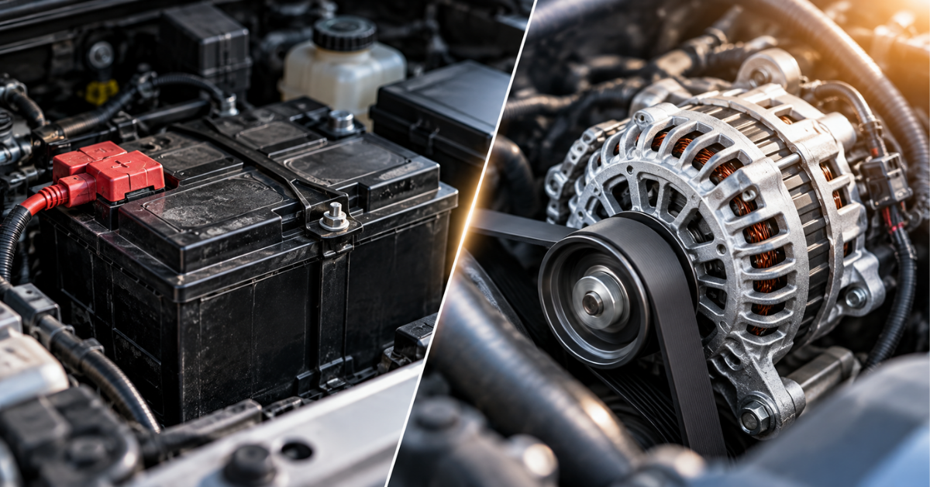
Car Battery vs. Alternator: How to Know Which One Is Causing the Problem

You turn the key and hear a weak click. Or your headlights dim while you drive. Now you wonder what went wrong. Most drivers blame the battery first, but the alternator can cause the same trouble. Knowing the car battery vs. alternator difference can save you time, money, and a long wait for a tow truck. We have spent years diagnosing these problems, and we want to walk you through it. Grab a coffee, and let’s sort it out together.

What Does Each Part Actually Do?

Both parts deal with electric power, so people mix them up. Each one has a different job at a different time.

The Battery Starts Your Car

Think of the battery as your car’s morning coffee. It gives the jolt needed to wake the engine. When you turn the key, it sends power to the starter and the ignition system. It also runs your radio and lights when the engine is off. A typical battery lasts about three to five years, though heat and short trips can wear it down sooner.

The Alternator Keeps Everything Running

Once the engine starts, the alternator takes over. A belt spins it, and it turns motion into electricity. This power runs your lights, radio, and other electronics. It also recharges the battery while you drive. In simple terms, the battery starts the party and the alternator keeps it going.

Signs to Watch For

Here are the symptoms of a bad battery vs. alternator we see most often. Some signs overlap, so look at the whole picture before you decide. One clue alone rarely tells the full story.

Signs Your Battery Is the Problem

  • Slow cranking: The engine turns over with a slow “rurr, rurr” sound. The battery does not have enough power to spin the starter well.
  • Rapid clicking: You hear quick clicks when you turn the key. The starter is asking for power, but the battery cannot deliver it.
  • Swollen case: Heat can make the battery case bulge. This is a clear sign to replace it.
  • Rotten egg smell: A sulfur smell usually means the battery is leaking. Replace it soon, and handle it with care.
  • Corroded terminals: White or blue crust on the posts blocks power flow. Cleaning them sometimes solves the issue.
  • Old age: A battery past five years is living on borrowed time, even if it still starts your car.

Signs Your Alternator Is the Problem

  • Dim or flickering lights: Headlights and dash lights may fade while you drive. Sometimes they turn overly bright instead.
  • Battery warning light: The light may show a battery icon or letters like “ALT” or “GEN.”
  • Strange noises: Whining, growling, or grinding under the hood can point to worn bearings inside the alternator.
  • Burning rubber smell: A slipping belt or overheated wires can create this odor.
  • Weak accessories: Power windows, seat heaters, and the radio may act slow or odd.
  • Stalling while driving: The engine dies after running for a while because the battery runs out of power.
  • Repeated dead batteries: You keep jumping or replacing the same battery, and the trouble keeps coming back.

A Quick Side-by-Side Look

Sorting out bad battery vs. bad alternator gets easier with a simple chart. Use it as a starting point, not a final answer.

Clue Likely the Battery Likely the Alternator
Car won’t start Very common Possible, after the battery drains
Trouble while driving Rare Common
Lights Dim before the engine starts Dim or flicker while driving
After a jump-start Runs fine and keeps running Starts, then stalls soon after
Warning signs Clicking, slow cranking, swollen case Whining noise, burning smell, battery light

Easy Tests You Can Try Before Calling a Shop

A few quick checks can point you in the right direction with a battery or alternator problem. Stay safe, and wear gloves and eye protection. Keep cables and hands away from moving engine parts.

The Jump-Start Test

This is the simplest test, and it needs no special tools. Follow these steps.

  1. Connect jumper cables from a running car to your battery. Follow the order in your owner’s manual.
  2. Wait a few minutes, then try to start your car.
  3. Once your engine runs, remove the cables in reverse order.
  4. Watch what happens next.

If the engine stalls, the alternator is the likely cause. If it keeps running, your battery is probably weak or dead. We call this a good clue, not a guarantee. Bad cables, fuses, or a starter can fool the test.

The Multimeter Test

A multimeter costs little and gives you real numbers. Set it to DC volts and touch the probes to the battery posts. Red goes on positive, and black goes on negative.

  • Engine off: A healthy battery reads about 12.6 volts. Anything under 12.4 means low charge.
  • Engine running: A healthy alternator usually reads between 13.5 and 14.7 volts.

If the running number falls below 13 or climbs above 15, the alternator needs a closer look. If the engine-off number is low but the running number looks fine, the battery is the likely weak link.

What Wears These Parts Out?

Batteries wear out from age, extreme heat, and bitter cold. Frequent short trips also hurt because the alternator never gets time to fully recharge the battery. Leaving lights on or chargers plugged in drains it further. Loose or dirty terminals cause trouble too.

Alternators usually last longer, but they still fail. Bearings and brushes inside can wear down. A loose or broken belt stops the alternator from spinning. Oil or water leaks can damage its inner parts. These two parts also affect each other. A failing alternator forces the battery to carry the whole electrical load. A weak battery makes the alternator work harder than it should. This is why we often replace one part and then find the other was hurting too.

Sometimes It Is Neither One

Here is something we see often. A driver replaces a good battery, but the car still will not start. The real problem turns out to be a bad starter, a loose cable, or a blown fuse. Each one can copy the signs above. If your battery tests fine and the alternator reads normal, look at these next. A shop can check the full starting and charging system in one visit.

When to Stop Driving and Get Help

Do not ignore a battery warning light or dimming headlights. These signs mean your car is running on borrowed power. Pull over in a safe spot if you smell burning or hear loud grinding. It is much better to call for help early than to get stranded on a dark road.

FAQs

How long will a car run with a bad alternator?

It depends on your battery’s charge. Most cars run from a few minutes up to an hour or two. Once the battery drains, the engine shuts off, so head to a shop right away.

Can a bad battery damage an alternator?

Yes. A weak battery makes the alternator work harder to recharge it. Over time, the extra strain can wear the alternator out early. Replacing a failing battery on time protects both parts.

How much does it cost to replace an alternator?

Most jobs cost roughly $400 to $1,000 or more. The price depends on your vehicle, the part quality, and labor time. Ask for a written estimate before any work begins.

Does a car battery charge while the engine idles?

Yes, but slowly. The alternator recharges the battery at idle, though a longer drive works better. A very weak battery may need a proper charger to fully recover.

Can a bad alternator ruin a new battery?

Yes. A failing alternator can undercharge or overcharge, which harms even a new battery. Always test the alternator whenever you replace a battery.

Let Us Help You Get Back on the Road

Still unsure about the car battery vs. alternator puzzle in your own driveway? We would love to help. At Cruz Automotive in Holland, MI, our ASE-certified technicians test your battery, alternator, and starting system with proper tools. We explain what we find in plain words, and we never guess. Call us at 616-298-7040 or stop by 13525 New Holland St to schedule a visit. Let’s find the real cause together, so you can drive with confidence again.

How to Tell If Your Alternator Is Failing Before Your Car Won’t Start?

You turn the key on a cold morning, and the car starts fine. Then the headlights dim on the drive to work. Ten minutes later, the dashboard flickers and the engine quits. It feels sudden, but the warning came earlier. Learning the signs of a failing alternator can save you from a dead car and a tow bill. We have seen this problem many times, so let us walk you through it.

What Does an Alternator Do?

Think of your battery as the spark and your alternator as the power plant. The battery starts the engine. After that, the alternator takes over. A belt spins the alternator while the engine runs. It turns that motion into electricity. This power runs your lights, radio, and dashboard, and it recharges the battery too. When the alternator weakens, the battery picks up the slack. It cannot do this for long. Once the battery drains, the car shuts off.

Bad Alternator Symptoms to Watch For

Alternators rarely quit without a hint. Most give small clues first. Here are the bad alternator symptoms we see most often, with a quick note on what each one means.

Dim or Flickering Lights

Your headlights may look weak at night. Dash lights may pulse or flicker. This happens when the alternator cannot send steady power. Some cars also show lights that get too bright, which points to a voltage problem.

A Battery Warning Light

The battery symbol on your dash does not always mean a bad battery. It often means the charging system has a fault. Some cars show the letters ALT or GEN instead. Treat this light as an early alert.

Strange Noises Under the Hood

A whining, growling, or grinding sound can come from worn parts inside the alternator. Bad bearings often cause these noises. The sound may change as you press the gas pedal.

A Burning Smell

A hot rubber smell may come from a slipping belt. A hot wire smell may come from an overworked alternator. Either one needs a quick look. Pull over safely and turn off the engine if the smell gets strong.

Weak Accessories

Power windows may move slowly. Your radio may cut out. Heated seats may feel lukewarm. Your car runs these parts on alternator power, so weak output shows up here first.

A Battery That Keeps Dying

A new battery should last for years. If yours keeps dying, the alternator may not be charging it. Many drivers replace the battery twice before they find the real cause.

Stalling or Hard Starts

Low power can weaken the spark your engine needs. You may notice stalling at stoplights or a rough idle. These are some of the more serious symptoms of a bad alternator. Book a check right away if you see them.

Alternator or Battery: How to Tell the Difference

Both parts cause similar trouble, so it helps to compare them. A weak battery often gives you slow cranking or a clicking sound at startup. Once the engine runs, the car may drive normally. A weak alternator often shows up while you drive. Lights dim, gauges act up, and the car may stall. The battery warning light usually appears too. Age matters as well. Most car batteries last about three to five years. Alternators often last much longer, though they can fail early.

One quick clue comes from a jump start. Get a jump from a running car, then start your engine and remove the cables. If the engine stalls soon after, the alternator is likely the problem. If it keeps running, the battery is the more likely cause. Treat this as a clue, not a final answer. Bad wires or a loose belt can fool the test. A shop can confirm the cause with proper tools.

How to Check Your Alternator at Home

You do not need to be a mechanic for a basic check. Take these steps in order, and stay safe around a running engine.

  1. Look at the dashboard: Start the car and watch for a battery or charging light. It should turn off after a moment.
  2. Check the belt: With the engine off, look at the belt near the alternator. Cracks, fraying, or a shiny surface mean it needs attention. It should feel snug, not loose.
  3. Test the battery first. Set a multimeter to DC volts. A healthy battery reads about 12.6 volts with the engine off.
  4. Test while running. Start the engine and check the battery again. A healthy alternator usually shows about 13.8 to 14.7 volts.
  5. Read the result. A number near the battery’s resting voltage means the alternator is not charging. A number far above the range points to a voltage problem.

Voltage ranges vary a little by vehicle. Your owner’s manual can give you the exact numbers.

Why Alternators Fail

Knowing the cause can help you prevent the next problem. Alternators wear out for a few common reasons.

  • Worn internal parts: Bearings and brushes wear down after years of spinning.
  • A bad drive belt: A slipping or broken belt stops the alternator from turning.
  • Leaks: Oil or water can seep in and damage the inside.
  • Heat and vibration: Hard conditions add stress and shorten its life.
  • Extra electrical load: Big stereos, extra lights, and other add-ons make it work harder.

Regular inspections catch most of these early. A quick look at the belt and wiring during routine service goes a long way.

What to Do If You See the Warning Signs

Do not wait until the car will not start. First, turn off extras like the radio, heated seats, and air conditioning. This saves battery power. Then drive straight to a repair shop, or pull over somewhere safe. Avoid long trips until someone checks it. A weak alternator can leave you stuck on a highway at night. That is a stressful place to learn this lesson. Most bad alternators need replacement, not repair. It is a job best left to a trained technician. The right diagnosis first can save you from buying parts you do not need.

FAQs

How long does an alternator usually last?

Most alternators last about 7 to 10 years, or 100,000 to 150,000 miles. Heat, heavy electrical use, and worn belts can shorten that. Regular inspections help you catch problems early.

Is it safe to drive with the battery light on?

It is risky. The light means your charging system has a fault. Your car may run for a short time on battery power, then stall. Head to a repair shop right away.

How long will a car run with a bad alternator?

It depends on your battery’s charge. Some cars run a few minutes, while others run an hour or two. Turning off extras like the radio and air conditioning can stretch your time.

Can a bad alternator ruin a new battery?

Yes. A weak alternator can undercharge a battery, and a faulty one can overcharge it. Both hurt battery life. Fix the alternator first, or the new battery may fail early.

Can an alternator fail without any warning?

It can, though this is less common. Most alternators show small signs first, like dim lights or odd noises. A sudden internal failure or broken belt can leave you with no warning at all.

Get Your Alternator Checked Before It Leaves You Stranded

If any signs that your alternator is going bad sound familiar, please do not wait. At Cruz Automotive in Holland, MI, we offer engine diagnostics and car engine repair. We will test your charging system, find the real cause, and explain the results in plain words. No confusing talk and no guessing.

Give us a call or visit our shop today. We would love to get you back on the road with confidence. Reach out to Cruz Automotive and let us take a look before a small warning turns into a big problem.